

Asynchronous Fault-Tolerant
Mutual Visibility

Subhajit Pramanick Subhajit Pramanick
Saswata Jana
Saswata Jana
Partha Sarathi Mandal Partha S. Mandal
S I R O C C O - 2 0 2 6, D U R H A M, U K

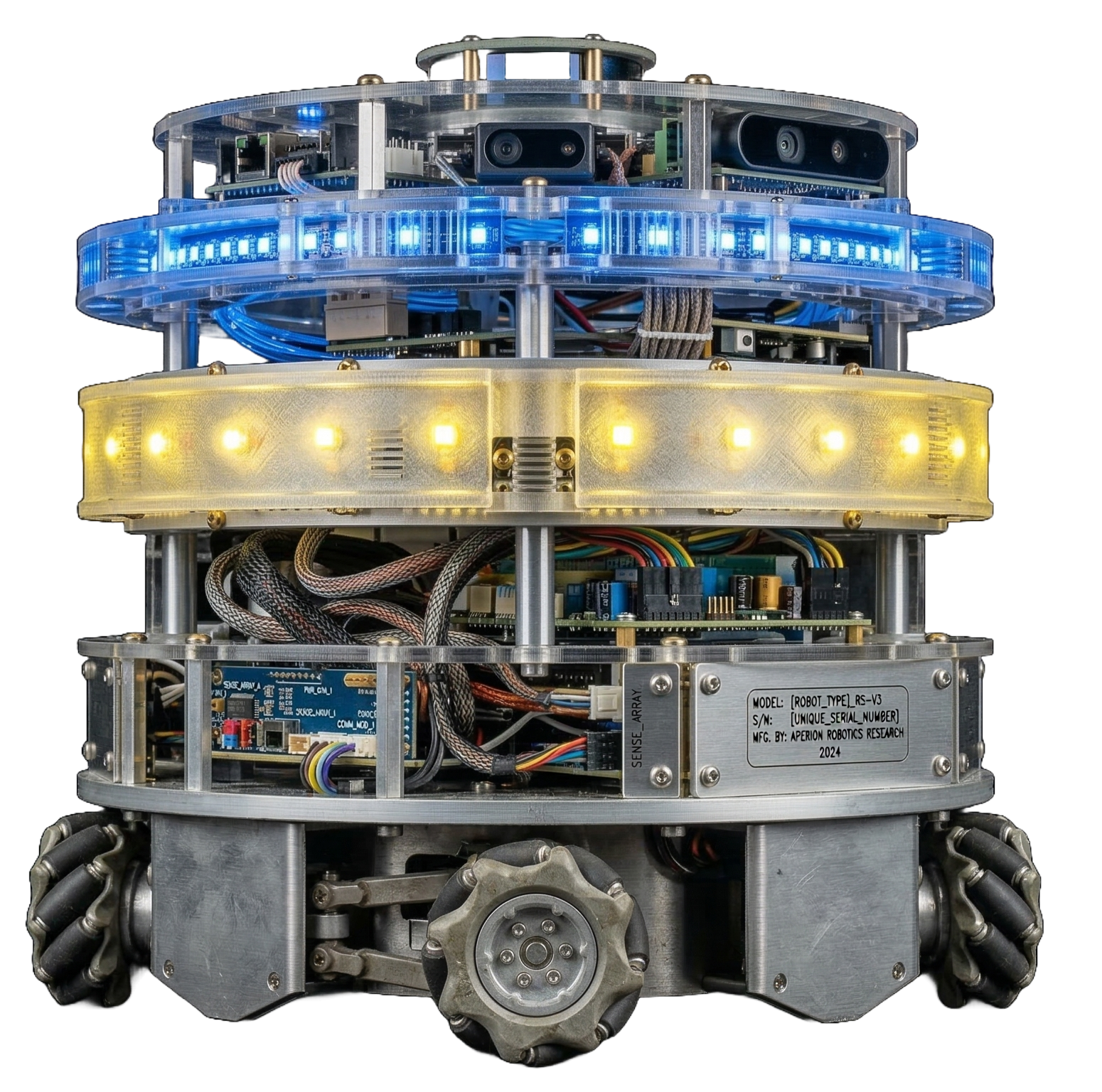
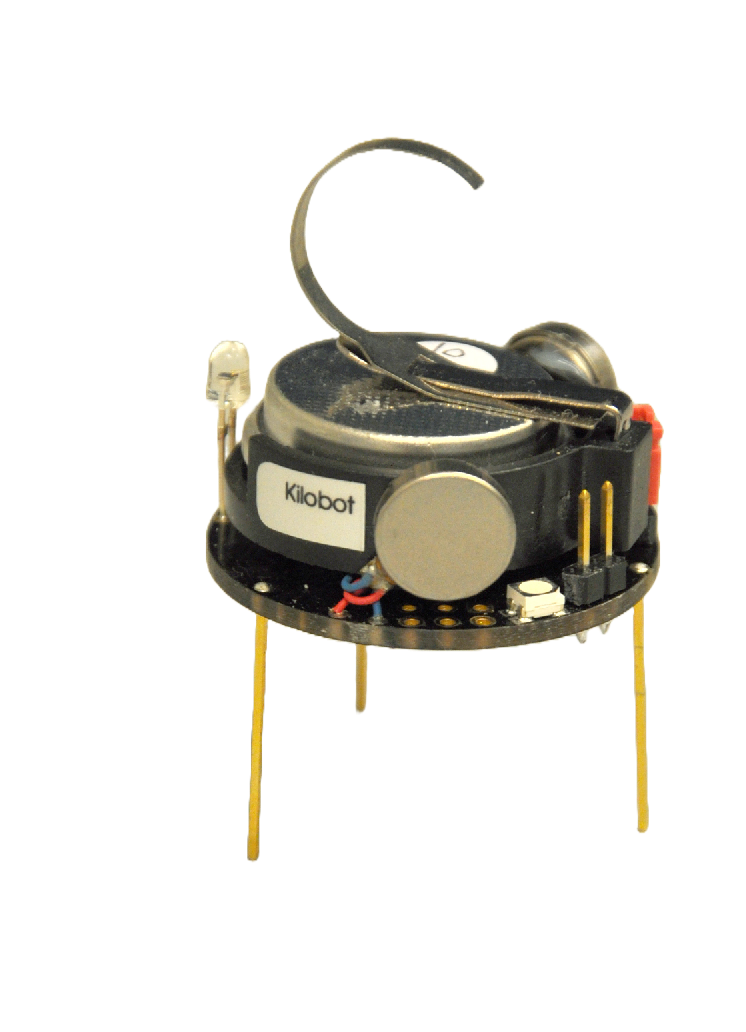
Swarm Robots

Group of Tiny Mobile Entities
Autonomous
Local Coordination
Coordinate via local sensing and communication
Anonymous
No unique IDs
Homogeneous
All robots run the same algorithm
Vision Sensors
Observe positions of other visible robots

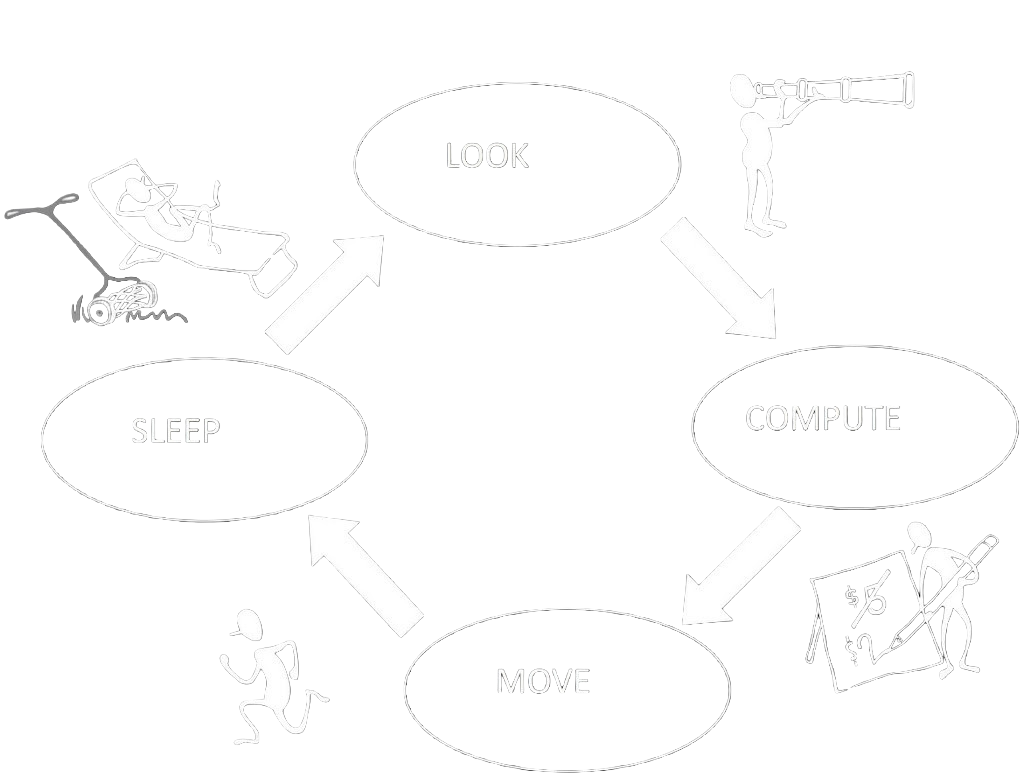
LCM Execution Cycle

L
LOOK
Robot takes a snapshot — observes positions and light colors of all visible robots
C
COMPUTE
Based on the snapshot, the robot executes the algorithm and decides its next destination
M
MOVE
Robot moves toward the computed destination point
↻ Robots repeatedly execute the LCM cycle

Luminous Robots

External Visible Lights
Color Palette
Predefined finite color set
Weak Communication
due to light-based communication
Persistent Memory
Colors persist across LCM cycles — everything else is erased

View of a Robot

Observation Mode
Own local coordinate system with the current location as the origin.
Sensor Range
Unlimited visibility, but might be obstructed.
r₁ x₁ y₁ r₂ x₂ y₂ P

Obstructed Visibility


r₁ r₂ r₃ blocked line of sight
Opaque Robots
i.e., non-transparent
Collinearity Creates Obstruction
The middle robot blocks the line of sight

The Mutual Visibility Problem

Goal: Move the robots so that no three robots are collinear, i.e., every pair of robots becomes mutually visible.

Initial Configuration

Target Configuration

Useful for Problems like:
  • 1
    Pattern Formation
  • 2
    Gathering
  • 3
    Leader Election in a group of robots
Application 1 Application 2 Application 3

Collision is not Allowed

Collision: When two robots are located at the same time and the same place, they meet a collision.

Mutual Visibility does not allow collision.

robot 1 robot 2 collision

Fault Model: Mobility Fault

r₁ r₂ faulty r₃
Cannot Move
A faulty robot loses its ability to move to a new position
Light Works
Its light remains fully functional — it can still execute the algorithm and change colors
Fault may occur at any time — even during mid-movement
Poudel, P., Aljohani, A., Sharma, G.: Fault-tolerant complete visibility for asynchronous robots with lights under one-axis agreement. Theoretical Computer Science 850, 116–134 (2021)

Fault-Tolerant Mutual Visibility

Aim is to achieve mutual visibility among non-faulty robots.

No three non-faulty robots should be collinear

should not occur

No faulty robot should lie between two non-faulty robots

should not occur

Three Important Aspects

Mobility Fault

A faulty robot cannot move but still executes the algorithm and can change its light color.

can't move · light works

Disorientation

No agreement on any coordinate axis — each robot has its own local frame.

r₁ x₁ y₁ r₂ x₂ y₂

Asynchrony

No notion of global time — any robot can be activated anytime under a fair scheduler.

r₁ L C M r₂ L C M L C M r₃ L C M L C M Epoch Smallest interval where all robots complete ≥1 LCM cycle

Comparison with State-of-the-Art

Paper No. of Faults Scheduler Axes Agreement Colors Time Complexity
Sharma et al. None ASYNC No 47 $O(1)$
Aljohani & Sharma 1 SSYNC Yes (both axes) 3 -
Poudel et al. $f$ SSYNC Yes (one axis) 2 $O(N)$
Poudel et al. $f$ ASYNC Yes (one axis) 3 $O(N)$
This Work (Ours) $f$ ASYNC No 26 $O(N)$

Power of the Adversary

Adversary Initial configuration Which robots become faulty Time of fault Robot activation schedule Orientation of coordinate systems

Challenges of Mobility Fault

r1 r2 r3

Movements do not always solve the problem.

Challenges of Mobility Fault

collinear

Power of colors might still be insufficient if movements are not carefully planned.

Some Impossible Configurations

Symmetric configurations with faulty robot lying at the center of symmetry.

Careful Movements Required

Cannot move all robots together -- that might create new collinearity issues.

collinear

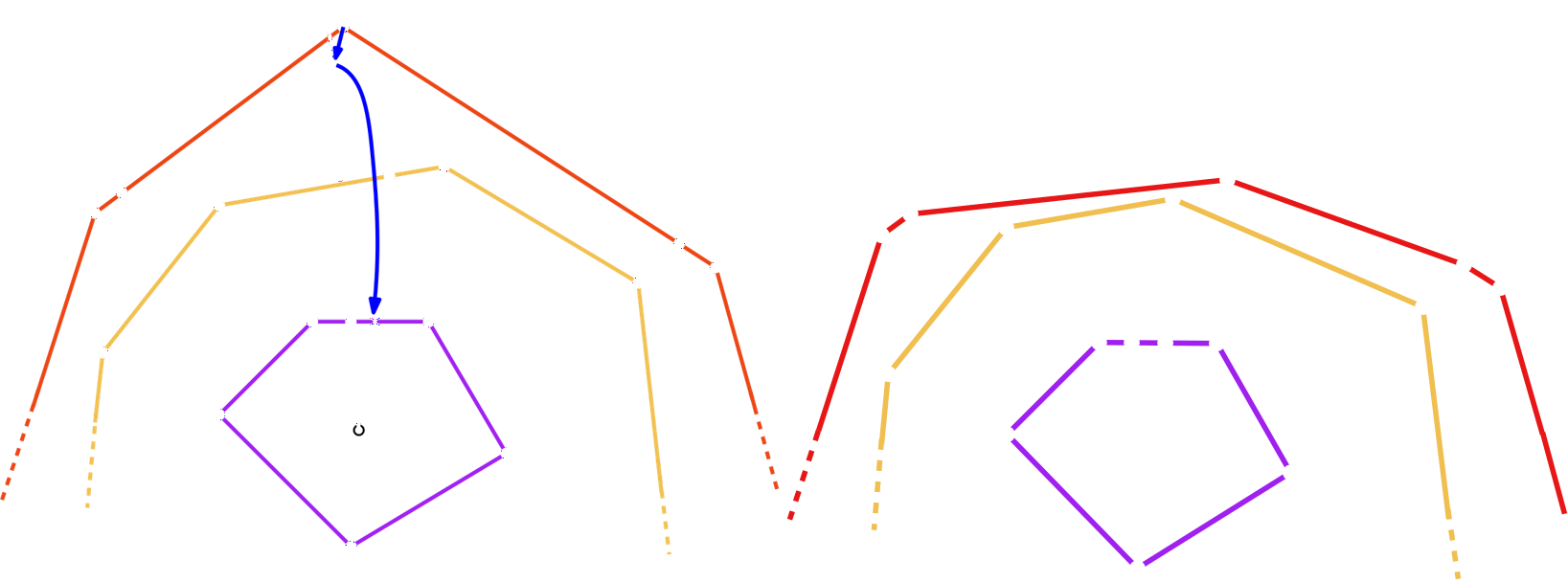
Disjoint Convex Layers

Outermost Layer $\mathcal{L}^1$

  • Consider the convex hull of all robots.
  • The boundary of this hull forms $\mathcal{L}^1$.

Layer $\mathcal{L}^j$

For \(j \geq 2\), layer \(\mathcal{L}^{j}\) is obtained recursively after removing all robots from \(\mathcal{L}^{1} \cup \cdots \cup \mathcal{L}^{j-1}\).

Innermost Layer $\mathcal{L}^k$

𝓛¹ 𝓛² 𝓛³

Corner, Boundary and Interior Robots

  • Corner robots are the ones on the vertices of the convex hull.
  • Boundary robots lie on sides connecting vertices of the convex hull.
  • Interior robots lie strictly inside the convex hull.
corner boundary interior
Corner Boundary Interior
This status remains intact even from a local point of view.

Broader Strategy: Where to Move?

  • Shall we move the (non-faulty) robots in the outward direction?
  • No. Because, faulty robots may obstruct visibility and robots do not know $N$ and $f$.
𝓛¹ 𝓛² 𝓛³

Broader Strategy: Where to Move?

  • A natural option is to move the non-faulty robots inward.
  • Robots can form a new convex shape inside the innermost layer, leaving the faulty robots outside.
𝓛¹ 𝓛² 𝓛³

Innermost Layer Detection

Epoch: 0
Initially each robot has the color OFF.
This subroutine may be of independent interest !
(for problems like universal dancing)

Two Possibilities of Innermost Layer

Non-linear Innermost Layer

ℒ¹ ℒ² ℒ³

Linear Innermost Layer

ℒ¹ ℒ² ℒ³

Our Aim: in Non-linear Case

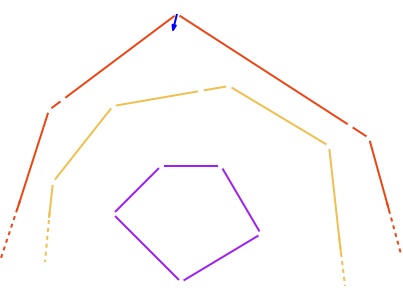
We bring all non-faulty robots to the innermost layer, starting from the outermost layer, and then proceeds layer by layer.
How to ensure that a robot lying on the outermost layer sees the entire innermost layer before the movement?
ℒ¹ ℒ² ℒ³ Can't see Innermost Layer

Visible Area for a Robot

The visible area of a robot is the polygonal subregion of the plane from which the robot can see all stationary robots without obstruction.

Robot $r$ (observer)
Visible robots to $r$
Not visible to $r$
$r_1, r_2$: neighbors on (local) convex hull
$u, v$: midpoints of $\overline{rr_1}$ and $\overline{rr_2}$

Algorithm for Non-linear Case

01
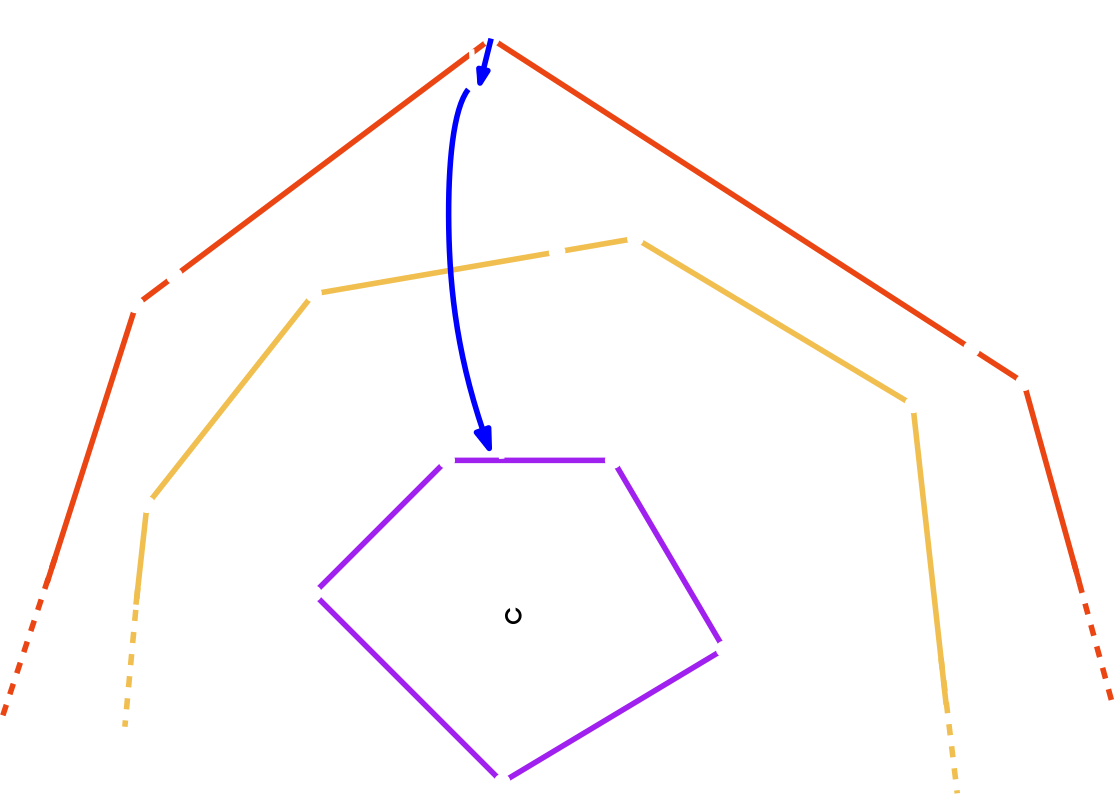
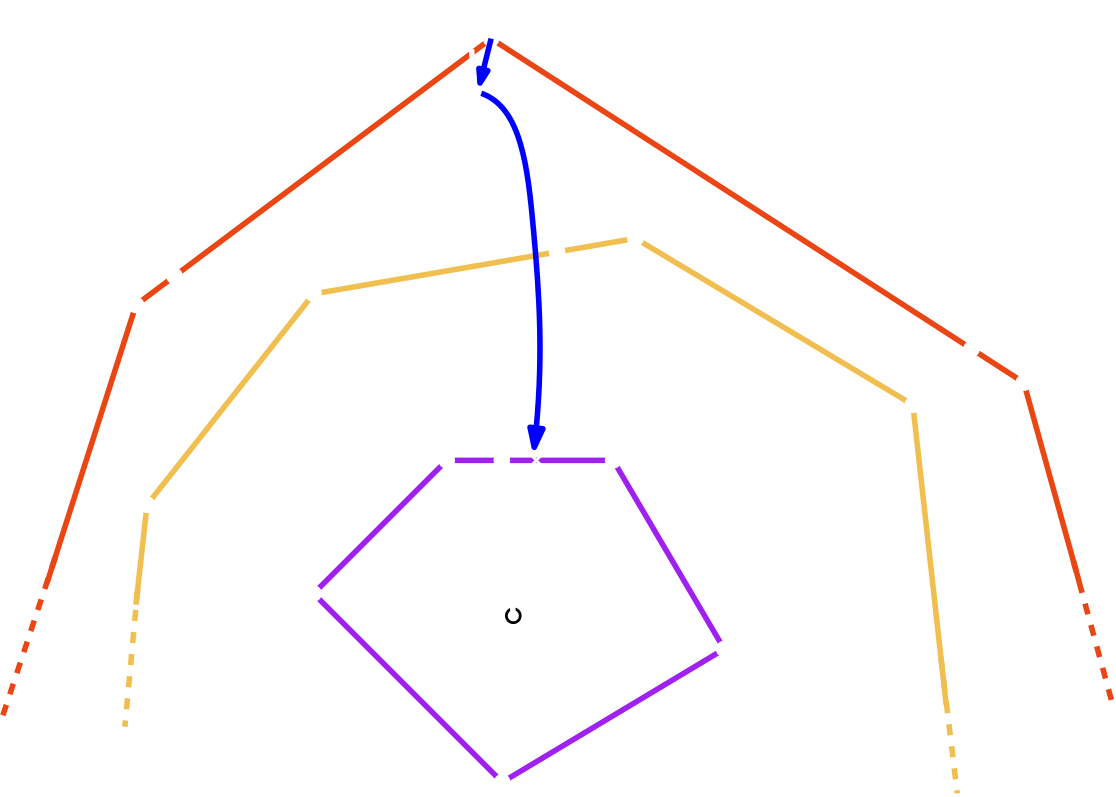
A corner robot r first moves to its visible area so that it can see the entire innermost layer, which are stationary now.
02
Compute the C.G. of the innermost layer and find the point of intersection of the innermost layer and the line segment connecting the C.G. and the current position of r.
03
If the point of intersection is occupied, shift the target point a little on the innermost layer itself.

Algorithm for Non-linear Case

If the movement of $r$ is successful, its neighboring boundary robots become new corner robots.

However, A Robot Might Be Faulty

So, how to distinguish the the following two configurations for a robot $r$?
$r$ failed to reach the innermost layer
$r$ has reached the innermost layer

Fault Detection

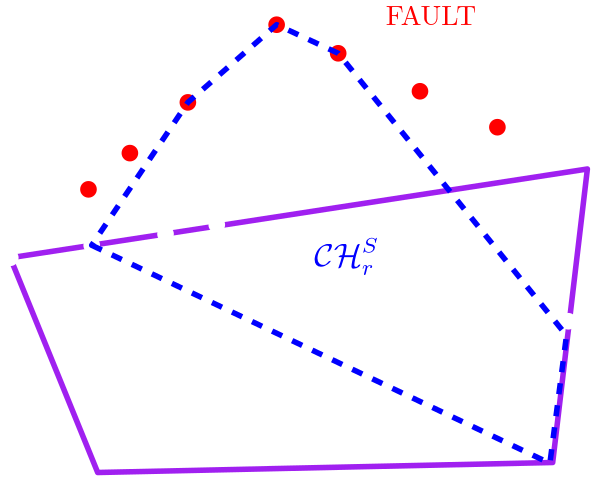
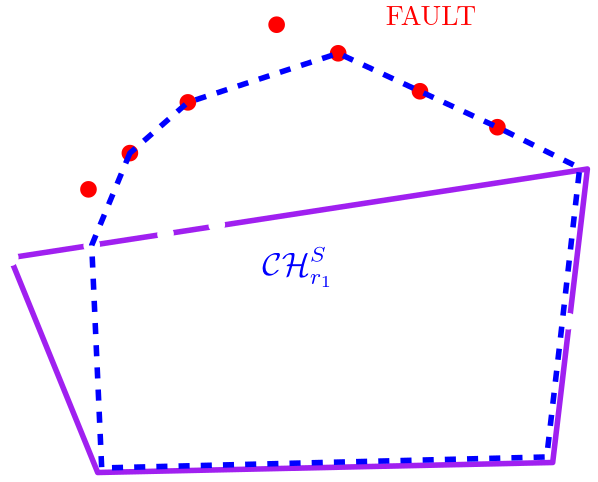
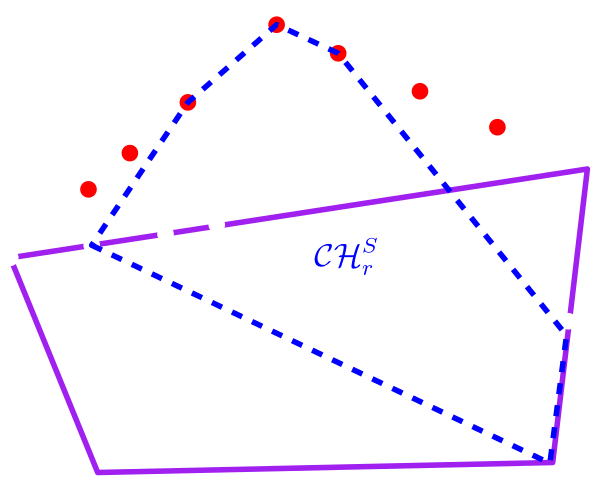
Let $S$ = the color INNERMOST + the colors used till now from the start of movement.
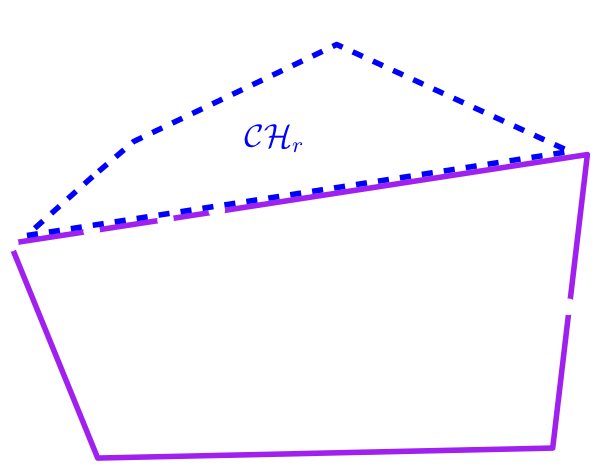
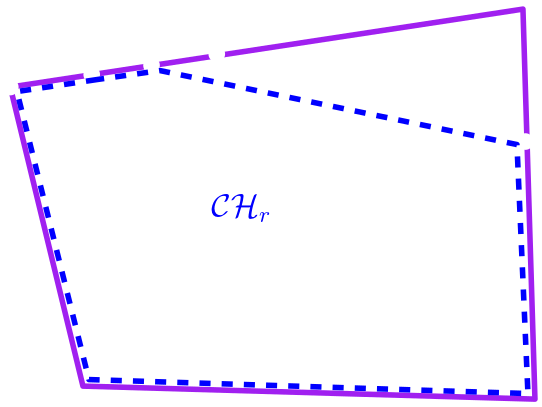
$\mathcal{CH}_r^S$ = convex hull of the robots with colors in $S$ that are visible to $r$.
01
Observe that, a corner robot $r$ cannot remain a corner robot, if it has reached the innermost layer without fault.
02
When $r$ finds itself still a corner robot on $\mathcal{CH}_r^S$, it switches to FAULT.
03
When $r$ finds itself still a corner robot on $\mathcal{CH}_r^S$, it switches to FAULT.
04
Since FAULT $\notin S$, the robot $r_1$ becomes a corner robot on $\mathcal{CH}_{r_1}^S$, which earlier was a boundary robot before $r$ switched to FAULT.

Movement From Innermost Layer

01
When robots are gathered on the innermost layer and faulty robots are outside, corner robots on innermost layer contract the layer.
02
Such a robot moves inside the innermost layer so that its neighboring boundary robots on the innermost layer become new corners.
03
Repeating this process, non-faulty robots achieve mutual visibility.

Algorithm for Linear Case

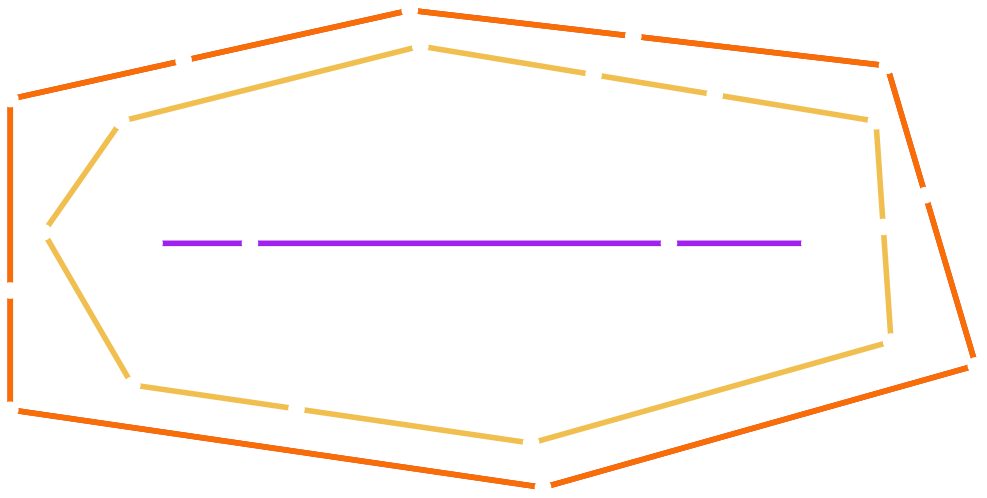
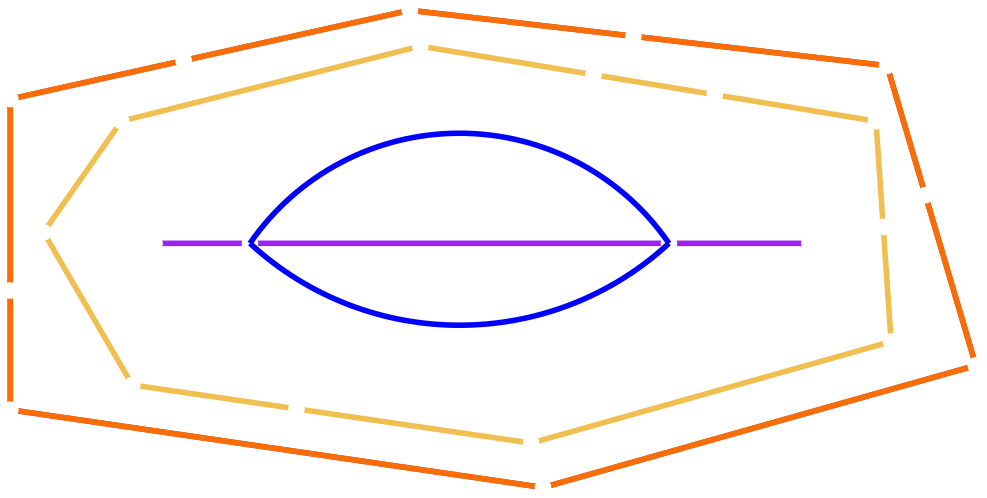
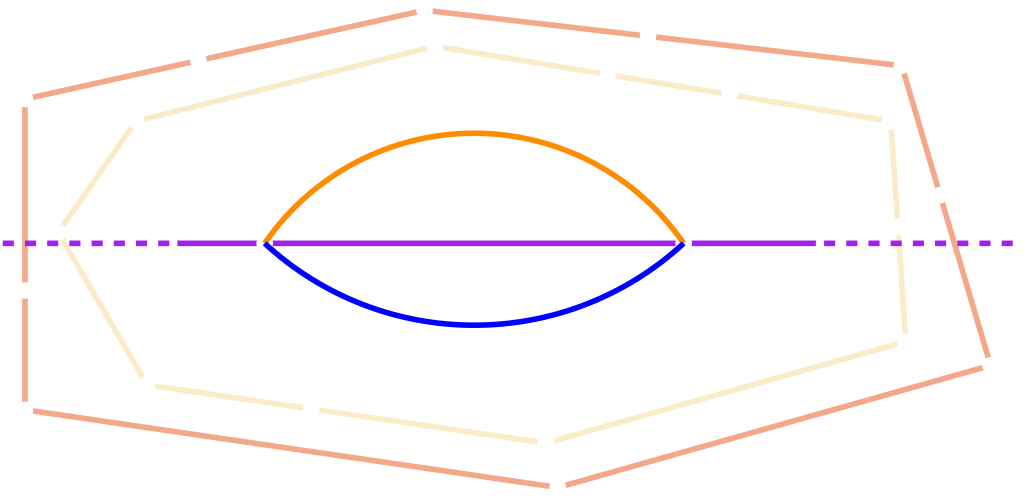
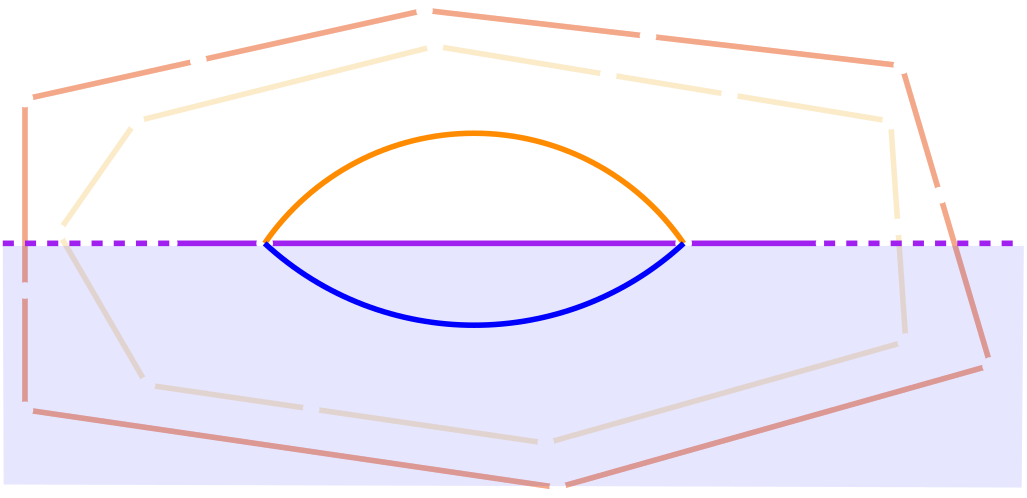
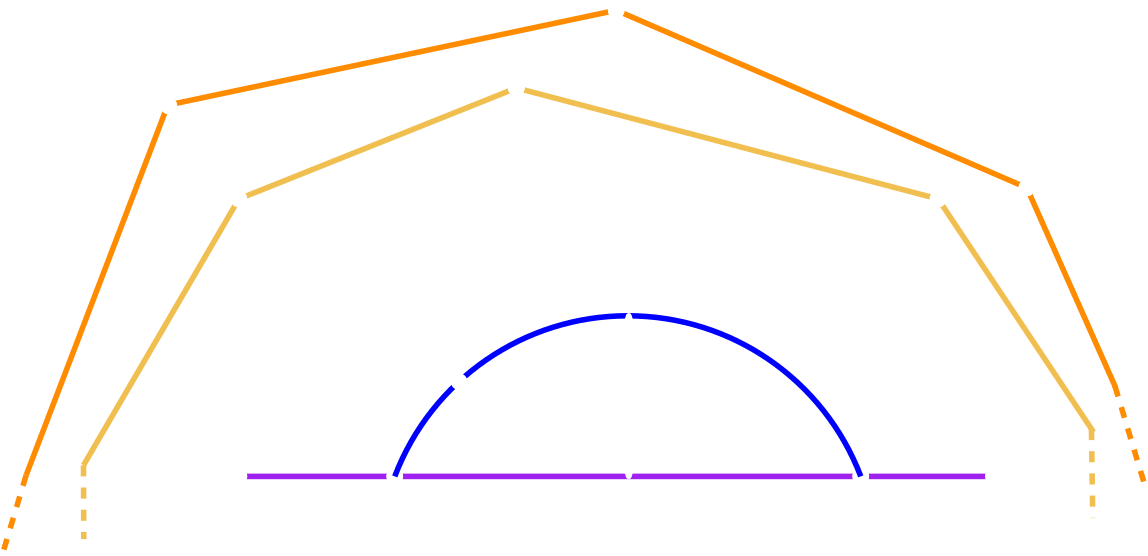
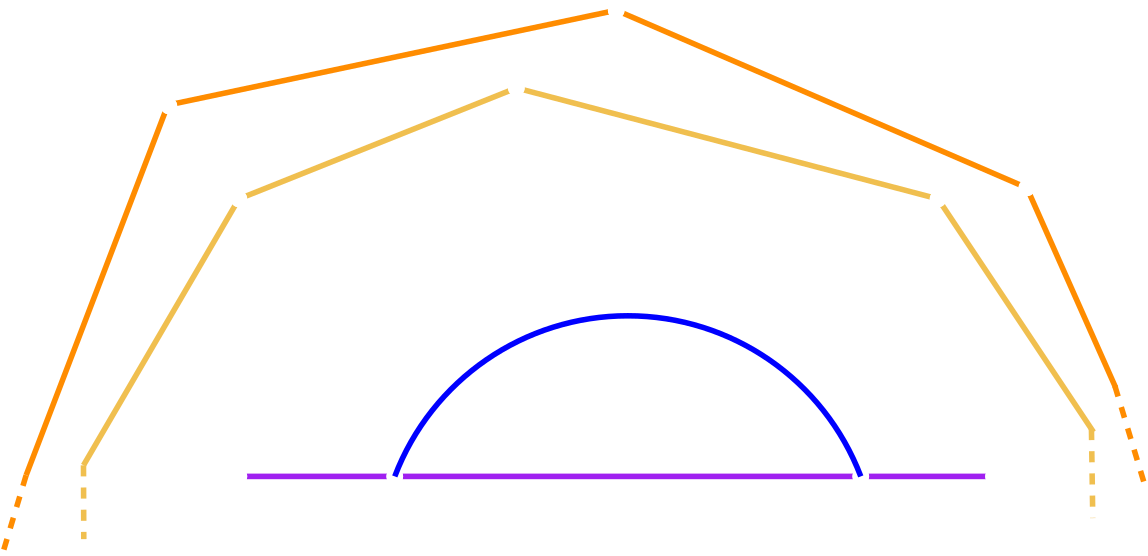
Our target is to move the non-faulty robots on an ellipse whose major axis is the line segement joining the central robots on the innermost layer.

Algorithm for Linear Case

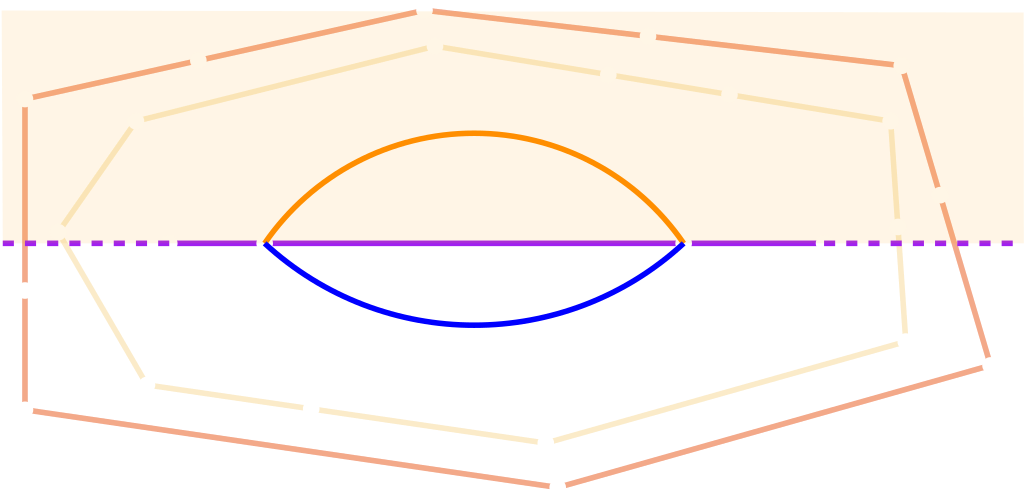
It does not have to be a perfect ellipse. The half ellipse on one half plane may have a different minor axis length than that of the half ellipse on the other half plane.
But their major axes are the same, so we still get a convex shape.
We want that the non-faulty robots lying on this half plane should move to the orange half-ellipse.
Similarly, the non-faulty robots lying on this half plane should move to the blue half-ellipse.

How to Determine the Half Ellipse?

We need two things.
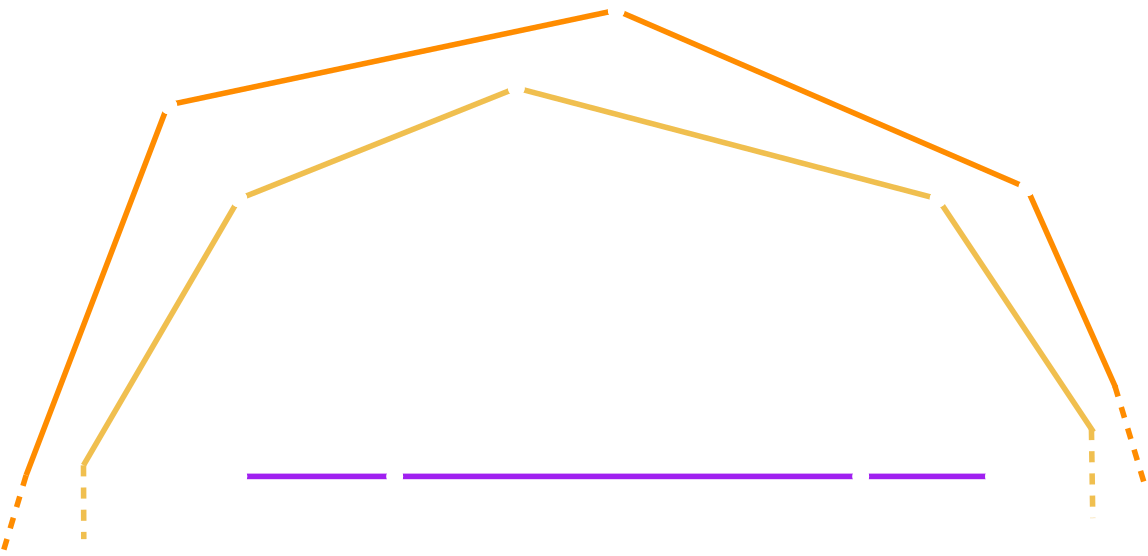
  • The central robots on the innermost layer to determine the major axis.
  • Another robot to determine the minor axis and hence the ellipse.
How to Determine the Half Ellipse?
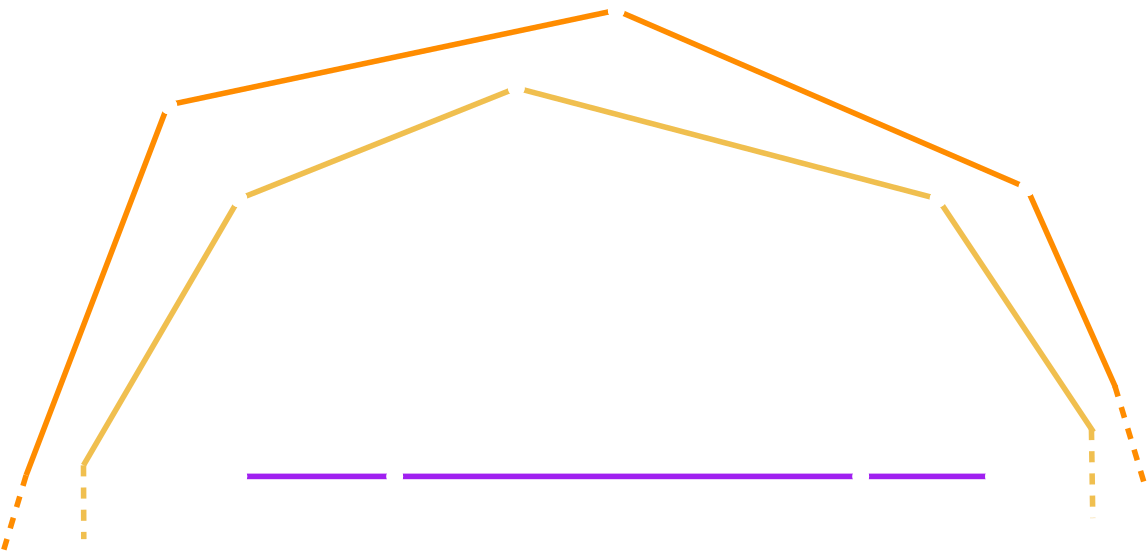
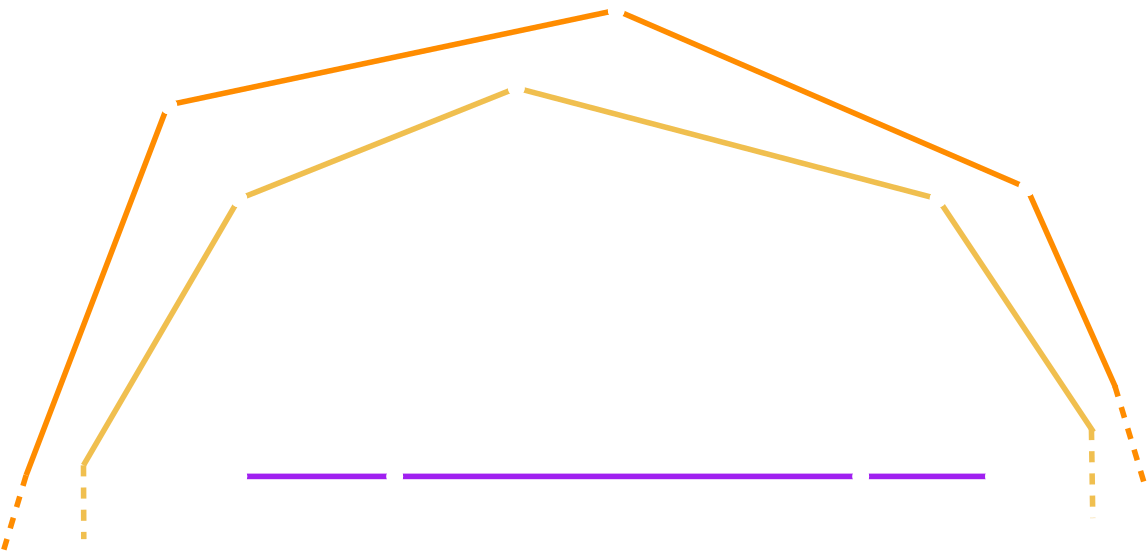
In this process, we first determine a Marker robot and give it a designated color.
A robot that can see the entire linear innermost layer.
Marker robots help determine the central robots on the innermost layer in query-feedback fashion.

Concluding Remarks

This paper presents $O(N)$ Fault-tolerant Mutual Visibility using $O(1)$ colors in the most general model (Asynchrony and Disorientation).
Time Lower Bound
We believe that it is somewhere very close to linear in N.
Future Work
The whole spectrum of fault-tolerant pattern formation is open.

Thank You!

Questions & Discussion